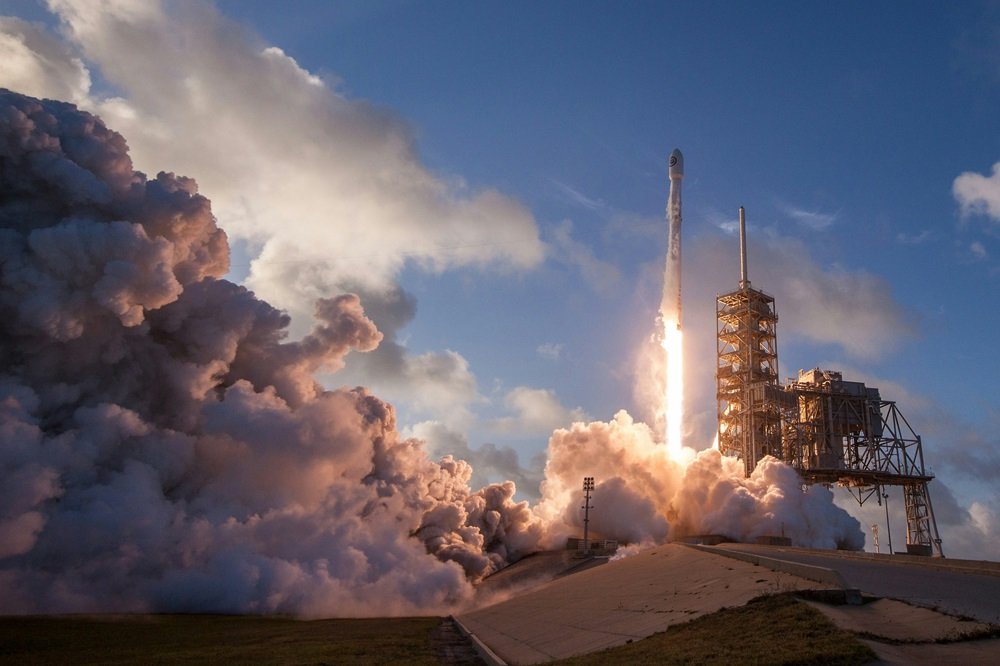
After a decade-long effort, the Pentagon has finally eliminated its reliance on Russian rocket engines. The United Launch Alliance (ULA) successfully delivered a classified U.S. military payload to orbit on Tuesday using an Atlas V rocket, marking the end of the Department of Defense’s use of Russian engines for national security missions, as it transitions to exclusively American launch vehicles.
The Atlas V rocket launched from Cape Canaveral Space Force Station in Florida at 6:45 am EDT (10:45 UTC), powered by a Russian-made RD-180 engine and five strap-on solid-fueled boosters in its most potent configuration. This mission, the 101st Atlas V launch since its debut in 2002, and the 58th and final national security mission since 2007, signifies a significant shift for U.S. defense.
The U.S. Space Force’s Space Systems Command confirmed the success of the mission, designated USSF-51, later in the day. Approximately seven hours post-launch, the rocket’s Centaur upper stage released the top-secret payload, likely into a high-altitude geostationary orbit over the equator. The exact specifications of the orbit remain undisclosed.
“What a fantastic launch and a fitting conclusion for our last national security space Atlas V launch,” said Walt Lauderdale, the USSF-51 mission director at Space Systems Command, in a post-launch statement. “Reflecting on how well Atlas V has met our needs since our first launch in 2007 illustrates the hard work and dedication of our nation’s industrial base. Thanks to teams like this, we have the most successful and thriving launch industry in the world.”
The Farewell to RD-180
The conclusion of Tuesday’s launch marks the end of an era that began in the 1990s when U.S. policy permitted Lockheed Martin, the Atlas V’s original developer, to utilize Russian rocket engines. Post-Soviet Union sentiments favored Western partnerships with Russia to employ its aerospace workforce and prevent nations like Iran or North Korea from recruiting them.
During this time, the Pentagon was seeking new rockets to replace older models of the Atlas, Delta, and Titan rockets, which had been in service since the late 1950s. In 1998, the Air Force selected Lockheed Martin’s Atlas V and Boeing’s Delta IV for development. The Atlas V, featuring a Russian main engine, proved to be more cost-effective and ultimately more successful than the Delta IV.
Following Tuesday’s launch, 15 more Atlas V rockets are slated for missions with commercial clients and NASA, primarily for Amazon’s Kuiper network and Boeing’s Starliner crew spacecraft. The last Delta IV launch occurred in April.
In 2006, Boeing and Lockheed Martin merged their rocket divisions to form United Launch Alliance, a joint venture with exclusive certification to launch large U.S. military satellites until SpaceX began its national security missions in 2018.
SpaceX initiated a lawsuit in 2014 challenging the Air Force’s decision to award ULA a sole-source contract for 36 Atlas V and Delta IV booster cores, following Russia’s annexation of Crimea and subsequent U.S. sanctions on Russian officials, including Dmitry Rogozin.
Rogozin, known for his aggressive rhetoric, threatened to halt RD-180 exports to the U.S., a move that became reality in 2022 amid Russia’s invasion of Ukraine. By then, ULA had secured enough engines for its remaining Atlas V missions. The export ban more significantly impacted Northrop Grumman’s Antares rocket, necessitating a new first stage booster with American engines.
The SpaceX lawsuit, coupled with Russia’s actions in Ukraine and the ensuing sanctions, signaled the beginning of the end for the Atlas V and ULA’s use of the RD-180 engine. The RD-180, produced by Russia’s NPO Energomash, burns kerosene and liquid oxygen, delivering 860,000 pounds of thrust.
With this landmark launch, the Pentagon celebrates a new chapter, free from reliance on Russian rocket technology, highlighting the resilience and innovation of the American aerospace industry.
Last modified: 31 July 2024